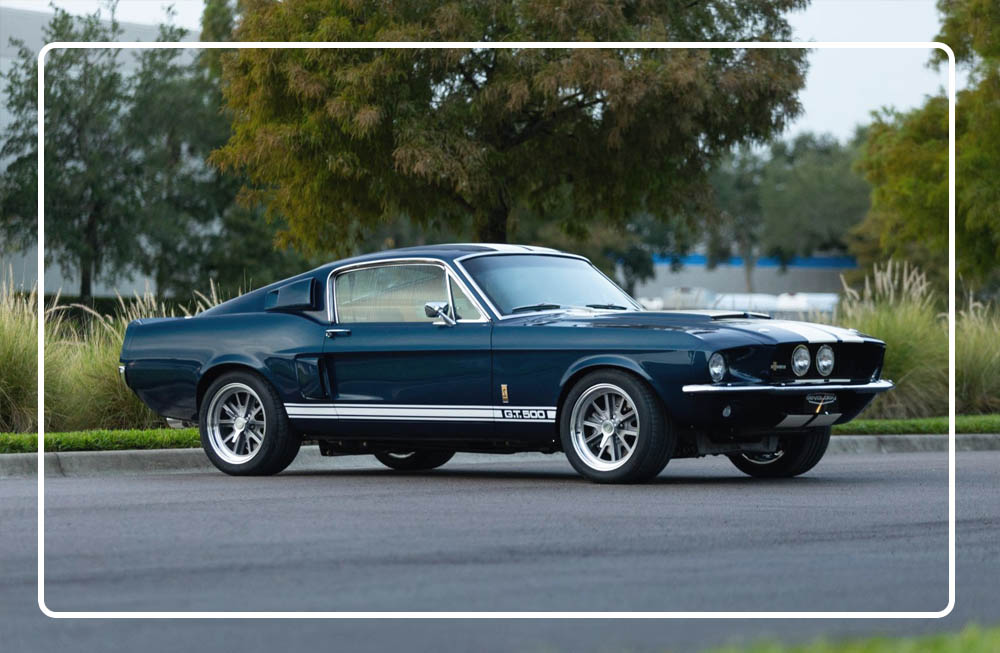
The 1967 Shelby GT500 is a high-performance version of the classic Ford Mustang, engineered by Carroll Shelby. It was the first year Shelby offered the GT500, which came equipped with a big-block V8, aggressive styling, and enhanced handling, making it one of the most iconic American muscle cars ever built. With a limited production run, the 1967 GT500 is highly collectible and remains a legend in the automotive world. Visit Wiki
Specifications and Features
Engine and Performance
| Feature | Details |
|---|---|
| Engine | 428 cubic-inch (7.0L) Police Interceptor V8 |
| Horsepower | 355 hp (factory-rated); actual output ~400 hp |
| Torque | 420 lb-ft |
| Fuel System | Dual 4-barrel Holley carburetors |
| Transmission | 4-speed manual or optional 3-speed automatic |
| Drive Type | Rear-wheel drive (RWD) |
| Top Speed | ~130 mph |
| 0-60 mph | ~6.5 seconds |
Dimensions
| Feature | Details |
|---|---|
| Length | 186.6 inches |
| Width | 70.9 inches |
| Height | 51.5 inches |
| Wheelbase | 108 inches |
| Curb Weight | ~3,250 pounds |
Fuel and MPG
| Feature | Details |
|---|---|
| Fuel Type | Gasoline |
| Fuel Tank Capacity | 16 gallons |
| City MPG | ~10-12 mpg |
| Highway MPG | ~14-16 mpg |
Safety Features
| Feature | Details |
|---|---|
| Brakes | Front disc brakes, rear drum brakes |
| Seat Belts | Front lap belts (standard) |
| Body Construction | Reinforced unibody |
| Lighting | Halogen headlights |
| Additional Features | Roll bar (optional), reinforced fiberglass hood |
Mustang GT500 Interior Features
| Feature | Details |
|---|---|
| Seating Capacity | 2+2 (front bucket seats, rear bench seat) |
| Upholstery | Vinyl (standard) |
| Dashboard | Unique Shelby gauges and trim |
| Entertainment System | AM radio; optional AM/FM radio |
| Climate Control | Heater (standard); optional air conditioning |
| Additional Features | Woodgrain steering wheel, Cobra emblem trim |
Mustang GT500 Exterior Features
| Feature | Details |
|---|---|
| Body Style | Fastback |
| Hood Design | Fiberglass hood with scoops |
| Headlights | Dual inboard or outboard (depending on production date) |
| Wheels | 15-inch alloy wheels |
| Paint Options | Classic colors like Wimbledon White, Nightmist Blue, and Candyapple Red |
| Stripes | Dual racing stripes (optional) |
| Badging | Cobra and GT500 emblems |
Current Price in the U.S.
| Condition | Price Range |
|---|---|
| Excellent (Restored) | $300,000 – $500,000 |
| Good (Well-maintained) | $200,000 – $300,000 |
| Fair (Functional but Worn) | $150,000 – $200,000 |
| Poor (Needs Restoration) | $100,000 – $150,000 |
Notable Features
- Performance Enhancements: The 1967 GT500 featured a lightweight fiberglass hood with scoops, functional air intakes, and an upgraded suspension for improved handling.
- Rarity: Only 2,048 units of the 1967 Shelby GT500 were produced, making it a highly coveted collector’s car.
- Pop Culture Icon: This model gained additional fame as “Eleanor” in the movie Gone in 60 Seconds.
The 1967 Shelby Mustang GT500 is more than just a car; it’s a symbol of American muscle and ingenuity, continuing to captivate enthusiasts and collectors worldwide.
1967 Shelby Mustang GT500: The Birth of an American Icon
Few cars in automotive history have left as strong a mark as the 1967 Shelby Mustang GT500. It wasn’t just another Mustang—it was a declaration of raw American power, performance innovation, and timeless design. Born from the collaboration between Ford and the legendary Carroll Shelby, the GT500 helped cement the Mustang’s reputation as more than just a stylish pony car. It became a muscle car legend.
In this article, we’ll explore how the 1967 Shelby GT500 came to life, what made it different, and why it continues to be one of the most sought-after classic muscle cars in the world.
From Pony Car to Muscle Car King
When Ford introduced the Mustang in 1964, it was an immediate hit, but it was primarily a “pony car” for style and accessibility. That changed when Carroll Shelby got involved. His first project, the 1965 Shelby GT350, gave the Mustang racing credentials. By 1967, muscle car competition was fierce with the Dodge Charger, Chevrolet Camaro, and Pontiac Firebird dominating the scene. Ford needed something bigger, faster, and bolder. The answer was the 1967 Shelby Mustang GT500.
Key Features of the 1967 Shelby GT500
The ’67 GT500 wasn’t just an upgraded Mustang—it was a true beast. Shelby and his team gave the car more muscle, more aggressive styling, and a larger-than-life personality.
The Heart: 428 Police Interceptor V8
At the core of the GT500 was a massive 428 cubic-inch Police Interceptor V8 engine. It was conservatively rated at 355 horsepower and a staggering 420 lb-ft of torque, with twin 4-barrel carburetors feeding the monster engine. Power was sent through either a 4-speed manual or 3-speed automatic gearbox.
Purpose-Built Design
The GT500 was instantly recognizable. Unlike the regular Mustang fastback, Shelby’s version featured a longer fiberglass hood with dual scoops, functional side air intakes, and unique Thunderbird taillights. Classic racing stripes and GT500 badging solidified its aggressive look. Inside, unique touches included a roll bar, wood-rimmed steering wheel, and extra gauges, blending muscle with luxury.
Production, Rarity, and Value
The 1967 Shelby GT500 is a highly sought-after collector’s item due to its limited production and unique heritage.
- Total 1967 Shelby GT500 Production: 2,048 units were built. Each car was hand-finished, with no two being exactly alike.
- Current Value: Authentic, well-preserved examples can command hundreds of thousands of dollars at auction. Pristine, numbers-matching models have been known to sell for over a million dollars.
The “Eleanor” Effect & Pop Culture Status
The 1967 Shelby GT500 achieved legendary status in pop culture, most famously as “Eleanor” in the 2000 film Gone in 60 Seconds. This appearance reignited global interest in the car, solidifying its place as one of the most recognizable muscle cars in the world. Even beyond Hollywood, the GT500 is a favorite among enthusiasts and collectors who admire its aggressive looks and historical importance.
The Legacy Continues
The 1967 Shelby GT500 was a turning point. It transformed the Mustang from a sporty car into a muscle car heavyweight and represented the best of 1960s automotive culture: power, style, and individuality. The nameplate lives on in today’s high-performance Shelby GT500 models, which carry the same spirit of blending brute force with innovation.