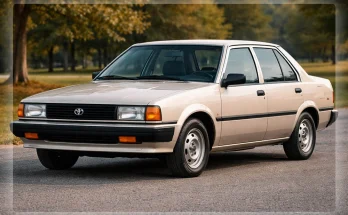
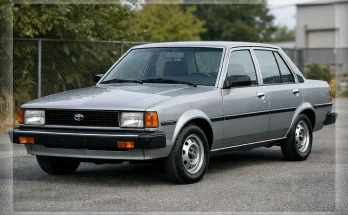
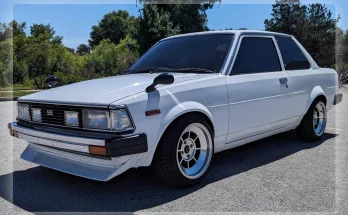
1979 Toyota Corolla Specs and Features

The 1979 Toyota Corolla specs include a Inline 4-cylinder (OHV/SOHC) engine, rear-wheel drive system, and 5, 4-speed manual, 3-speed automatic. This guide covers engine performance, MPG, price, and key features of the 1979 Corolla.

1979 toyota corolla specs

The 1979 Toyota Corolla represents a key transition period in the model’s history, marking the introduction of the fourth-generation (E70) lineup in many markets while continuing Toyota’s reputation for reliability, efficiency, and affordability. Built with a simple rear-wheel-drive layout, the 1979 Corolla offered a range of small yet dependable inline-four engines, making it an economical choice during an era of rising fuel concerns. Available in multiple body styles including sedan, coupe, liftback, and wagon, it catered to a wide range of drivers—from daily commuters to those seeking a lightweight, easy-to-maintain car.

Engine Specs

SpecificationDetails
Engine Types1.2L, 1.3L, 1.5L, 1.6L, 1.8L Inline-4
Common Engines3K (1.2L), 4K (1.3L), 2T-C (1.6L), 3A (1.5L), 13T (1.8L)
Fuel SystemCarburetor
Power Output~55 hp – 95 hp depending on variant
Torque~83 Nm – 147 Nm
ConfigurationInline-4, OHV/SOHC
AspirationNaturally aspirated

Performance

SpecificationDetails
0–60 mph~12.5 – 16.5 seconds
Top Speed~87 – 100 mph (140–160 km/h)
DrivetrainRear-Wheel Drive (RWD)
Transmission4-speed manual, 5-speed manual, 3-speed automatic

Fuel Economy

SpecificationDetails
City~20–25 MPG (US estimate)
Combined~20–30 MPG
Consumption~7.8 – 11 L/100 km
Fuel TypePetrol (Gasoline)

1979 Toyota Corolla Safety Features

FeatureAvailability
Seat BeltsStandard
Disc Brakes (Front)Available
Rear Drum BrakesStandard
Crumple ZonesBasic
AirbagsNot available
ABSNot available

Interior

FeatureDetails
Seating Capacity5 passengers
UpholsteryCloth/Vinyl
DashboardAnalog gauges
Air ConditioningOptional
RadioOptional AM/FM
SteeringManual steering (power optional in some markets)

Exterior

FeatureDetails
Body StylesSedan, Coupe, Liftback, Wagon
HeadlightsRound or rectangular (market dependent)
BumpersChrome (metal)
Paint OptionsSolid factory colors
Trim LevelsBase, DX, SR5, GL

Dimensions

SpecificationDetails
Length~3995 – 4180 mm
Width~1570 – 1625 mm
Height~1325 – 1390 mm
Wheelbase~2400 mm
Weight~790 – 975 kg

Trims & Variants

Trim / VariantDetails
Base / StandardEntry-level
DXMid-level with more comfort
SR5Sport-oriented (better engine, features)
GL / SEHigher trims (market dependent)
Body VariantsSedan, Wagon, Coupe, Liftback

Chassis & Suspension

ComponentDetails
PlatformE70 (4th gen) / E30 (late US models)
LayoutFront-engine, RWD
Front SuspensionMacPherson strut
Rear SuspensionLeaf spring or coil spring (variant-based)
BrakesFront disc / Rear drum

Wheels & Tyres

SpecificationDetails
Wheel Size12–13 inch steel wheels
TyresBias-ply or radial
Typical Size~155/80 R13 (varies by trim)
Spare WheelFull-size

Current Market Value (U.S.)

ConditionPrice Range
Project / Poor$1,500 – $4,000
Good Condition$5,000 – $10,000
Excellent / Restored$12,000 – $20,000+
Rare SR5 / CoupeCan exceed $20,000

FAQs 1979 Toyota Corolla

What generation is the 1979 Toyota Corolla?

The 1979 Toyota Corolla belongs mainly to the fourth generation (E70). However, in some markets like the U.S., late third-generation (E30) models were still sold alongside the newer version.

What engine options were available in the 1979 Corolla?

The 1979 Corolla came with several small and efficient inline-4 engines such as 1.2L (3K), 1.3L (4K), 1.5L (3A), 1.6L (2T-C), and 1.8L (13T). These engines were known for durability rather than high performance.

Is the 1979 Toyota Corolla rear-wheel drive?

Yes, the 1979 Corolla uses a rear-wheel-drive (RWD) layout, which was standard for the model before it switched to front-wheel drive in the 1980s.

What makes the 1979 Corolla special today?

The 1979 Corolla is valued for its classic design, mechanical simplicity, and historical importance as one of Toyota’s most successful and long-lasting models.

Is the 1979 Corolla a good classic car today?

Yes, it is considered a good entry-level classic car. It is affordable, easy to work on, and has growing popularity among vintage Japanese car enthusiasts.

Previous Models